Showing posts with label Language. Show all posts
Showing posts with label Language. Show all posts
Monday, November 8, 2010
Bafflegab at its best
Oh boy. This has to be the worst press release ever (nah, prob'ly not). Besides the grammar problems, just what is it they're trying to sell?!?! (Don't bother clicking through to their website, it doesn't exist.) A prior press release from them seems rather redundant... If you can figure it out, let me know - please!


What is odd about this?
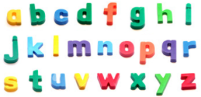 I sincerely hope that Douglas R. Hofstadter doesn't mind me quoting his entire essay below, but it's kinda important that I do it this way. Full credit: it's his copyright, and you can reference it here (but don't look yet!).
What is unusual about this essay?
(Clue: Read the first and last sentences carefully. There are a few other clues sprinkled around, mostly near the end of the essay. Not to mention the title of this post...) The answer appears near the bottom of the sidebar so as not to make it obvious to my faithful readers.
Bonus: It's a portrait of his life, fascinating reading regardless of the embedded puzzle.
----------------
Autoportrait with Constraint
or
Vita in Form of a Lipogram
by
D.R.H.
Autumn, MMVIII
I was born in midtown Manhattan right as World War Two was drawing to a, uhmm... to a conclusion. My Dad was a physics prof at an august institution roughly an hour south by train, and until I was two or so, my Dad did "wrong-way commuting" to work and back. Finally our family found a flat and had a short stint living in that most Ivy of Ivy towns, but around my fifth birthday, my Dad got an alluring invitation to work way out in California, and so my folks, my baby sis Laura, and I all got into our car, took off on a cross-country jaunt, and soon wound up at Stanford. I did most of my growing-up on campus, going to junior high and high school in Palo Alto, and so it was natural that I should go to Stanford (as did most of my cohorts, in fact).
Our folks' third and last child, Molly, born in Palo Alto, was, sadly, not what anybody had thought. By four or so, Molly was visibly abnormal - not saying any words at all, nor absorbing any. It wasn’t autism; it was a profound brain malfunction, probably dating from birth or prior to birth, but what was wrong, nobody could say - no diagnosis. Molly just didn't pick up any words, who knows why, and our Mom and Dad had such anguish for so long on Molly's account, as did Laura and I. What bad luck.
I, loving math from childhood, took as much of it as I could at Stanford (calculus, groups, topology, and such topics), but I also got into studying Italian, Latin, Spanish, Hindi, bits of Russian and Tamil, and so on - but most of all, I must say, a strong and idiomatic command of français was my goal. Our family’s prior Swiss sabbatical, during which I was in "third form" in a British-run school (similar to ninth in a junior high) and had a fun francophonic pal (our voisin), did a lot toward bringing this about. Although I found linguistics intriguing from afar, upon actually taking a class in it at Stanford, I found it too formalistic and artificial, but luckily, that didn't diminish my captivation with words, sounds, grammars, and symbols, which still had a fantastic magic, pushing and pulling my young mind to its limits. I was curious about how brains (or minds, if you will!) think, and thus I found symbolic logic's rigid simulacrum of cognition fascinating; programming, too, was an important part of my multifarious mind-pursuits.
Though constantly musing about all sorts of abstract topics, I wasn’t just a lump on a log — not by a long shot. In fact, I did sports — in fact, "sports of all sorts" (as Lucky says in Waiting for Godot): running, jumping, vaulting, tossing, bowling, swimming, skating, skiing, ping-ponging, mini-golfing (plus a bit of maxi-golfing), occasional hoop-shooting, and loads of biking. Oh - how could I omit this? - a droll local adaptation of that cutthroat British sport of hitting colorful wood balls through hoops on lawns, and knocking your rivals as far away as you can. Most jolly! Of all things, though, I'd say music was my most constant companion - Chopin, Bach, Rachmaninoff, Scriabin, and on and on - plus lots of old jazz - Louis, Bix, Hoagy, Fats, Zutty... Also, I did a bit of piano-playing, but not a lot - mostly just absorbing music off of spinning vinyl, coming to know so many works.
As is probably obvious, I had a highly romantic soul, but sad to say, I struck out with girls; that was always a puzzling, troubling fact. Looking back at it all now, I think that Stanford's pitifully low girl/boy ratio was probably a big part of it. (It's fifty–fifty nowadays, but fat lot of good that'll do for yours truly!) Also, I was a bit young to go to Stanford - a nontrivial handicap. Anyway, my major at Stanford was math and I had basically no difficulty with it, pulling down mostly A's and also making lots of original findings. Blazing my own idiosyncratic pathways, though of minor import and mostly just in quaint, oldish nooks of math, was wildly intoxicating.
My Dad, at forty-six, won a fantastic physics award, as grand an award as our world knows, involving a trip for all our family to Stockholm in wintry snow, donning formal tails and chic gowns, strolling through classic palatial halls, hobnobbing with royalty (tricky protocol!), chit-chatting with many world-class minds, and savoring our VIP status. It was all much as in a fairy story, practically magical. And I got to bask in my Dad’s honor, not just vanish in his shadow, as many might think. Ah, glory days!
 |
| D.R.H. |
But from our cows, back now to our moutons. Post-graduation, I took a long vacation from school: four months in London plus a six-month stint in Scandinavia (half in Lund, half in Stockholm). Lots of longing for a fair young flickvän, but no such luck - and oh, such angst! Anyway, following that Nordic saga, back in my old stomping grounds, I took up grad school in math at Stanford's traditional cross-Bay rival, Cal. Although I thought I would do a bang-up job, I soon saw I was wrong - in fact, math grad school was a crushing fiasco. All that fancy-shmancy ultra-abstract stuff was just too arid and confining, affording my highly visual mind nothing at all to grab onto. ¡Ay ay ay! I had hit a tough crossroads. What to do?
At this point, I was practicing piano many hours a day (contrapuntal intricacy, Slavic poignancy, Gallic sublimity, a touch of polytonality, but nothing atonal!), and also I was composing a bit, imitating my idols, and so I naturally thought of music - composition in particular - as a pathway I might follow, but by light of day, that was just too iffy. My only option, so I thought, was to drop out of math and jump into physics - a daring foray, as I had found physics horribly difficult, though inspiring, at Stanford. And, in fact, studying physics in grad school (U of O in "Duckburg", as it was known, up north) was no picnic, to put it mildly. At first I found it thrilling, I admit, but bit by bit it got turgid and confusing, and finally I wound up finding it as ugly as sin. My spirits sank low, low, low. I'd blown it in math; was I now going to fail in physics, too?
Pausing for a short bit in my mostly chronological narration, I'll talk just a tad about what kinds of non-physics things I was doing during my days of physics turmoil. Still tons of music, first of all - playing piano on a daily basis, plus lots of small piano compositions, of which I was proud. Also, studying Russian (but I didn't go far). And lastly, political activism.
Having grown up with a highly political Mom and Dad (hardly right-wing, mind you!), I wound up political, too, highly conscious of moral topics. A typical outgrowth of that is this: during my grad-school days, on a trip to Italy with our folks, my sis Laura and I both put a halt to our carnivorous habits, as it was too troubling to us to play any part in killing animals, and I still hold to that philosophy today. Also during my grad-school days, with inspiration coming from such pacifistic paragons as Mahatma Gandhi and Dr. M. L. King, I did political work to aid folk not as lucky as I was. Awful assassinations - JFK, RFK, MLK - had crucial impacts, strongly sparking my political and social activism, including such things as fighting starvation in Biafra, organizing boycotts in support of a farm-labor union, participating in day camps for minority kids, saving wild parts of our national parks from mining, crusading against atomic arms, opposing that insanity known as "Star Wars", plus working towards linguistic and social parity for woman and man. I thank my family for this all-important gift of altruism.
 |
| Gplot (click it!) |
Ironically, by that point I had truly had it with physics and its always-growing list of disappointing, arbitrary complications, such as quarks and gluons (too many "colors" and "flavors"); "charm" (distinctly uncharming); a most grungy rabbit-out-of-a-hat trick by Higgs and company (making mass from nothing); plus that Cabibbo-Kobayashi-Maskawa quark-mixing matrix (its long, gawky CaKo-phonic tag hints at my discomfort). In a word, I was so off-put that I quit, going out in Gplot's small, happy flash of fractal glory.
Luckily, though, my mind, always curious about its surroundings, rapidly found stimulation in grappling with minds, brains, souls, computation, AI, and that loopy conundrum of what an "I" is - all still abstract stuff, no doubt, but not so much so as physics or math. In fact, soon I was busy writing a highly idiosyncratic book which I thought of as my own way of "braiding" that odd batch of far-flung topics about mind into a natural unity.
At thirty-two, with my book on its way but still not out, I took a job at Indiana U. in Bloomington, thanks in part to its famous music school, and also to its florid, woodsy campus, but most of all to its warmth and cordiality. "Go for folks who go for you!", was my Dad's simplistic but catchy motto (I'm paraphrasing his words to adapt to this situation, naturally, but that was its gist) - and I took his tip, for though it was corny, it was sagacious, too.
At IU, my goal was to work in AI, most of all trying to mimic faithfully, in programs, how thought actually works. Crucial to my philosophy of computationally mimicking a mind was my constant focus on how humans think - which is to say, fluidly but also fallibly - that is, not logically, but analogically. Also, I was scrambling madly to finish up my big book - a most unusual book, flip-flopping back and forth from fanciful contrapuntal dialogs - canonical and fugal - to fairly straightforward monographical writings, and also chock-full of mind-twisting prints by an almost unknown paradox-loving Dutch graphic artist. Upon publication, my book was a surprisingly big hit and won a major national book award, assuring my job stability. I was thirty-four (or so), and still high and dry.
But I'd had a hunch that IU was promising in that most chancy of all domains, and in fact, I was right. I was oh-so-lucky to bump fortuitously into Carol Ann Brush in an auditorium lobby during a film. Carol was an Italian and art-history major doing grad work in librarianship. My oh my! Although our liaison had a bit of a bumpy start, Carol and I had a lot in common and soon hit it off in grand fashion. Thus, at long last - at thirty-six - I had a most happy romantic affair. What a turning point!
Soon I got an invitation to go to Michigan - so good that I couldn't turn it down, actually - and thus I sadly forsook Bloomington for Ann Arbor. It was in that unflappably tooting-its-own-horn town, in fact, that Carol and I wound up marrying (Carol was thirty-four, yours truly was forty); it was in Ann Arbor, too, that Carol and I took a ballroom dancing class, and that our first child, Danny, was born. Slowly, slowly, I was adapting to Michigan, but Indiana was hoping I still had a soft spot for it, and in fact I did. Upon our old school's making an outstanding job proposal, Carol and I found it most fitting to go back to IU. This was a big joy for us - no ifs, ands, or buts.
 |
| D.R.H. ambigram (flip this pic 180°) |
But alas, on our first sabbatical away from IU, in an idyllic mountain-clad town in Italy's far north, as Christmas was drawing nigh, Carol was struck without any warning by a malignant brain tumor, and in but a day or two was in a profound coma. Our kids and I lost Carol that awful month. In a flash, Danny (still shy of six) and Monica (just two-and-a-half) and I had to adjust to living without a woman in our midst, without a Mom. It was tragic for Carol, and cataclysmic for our small family, now just a trio. But this ill wind notwithstanding, I didn't abort our sabbatical, as Carol had had such high aspirations for what it could bring us all. Many kind Italian folks, knowing our plight, warmly took our family in, adopting Danny and Monica with amazing compassion, most of all at Cognola's asilo (that is, school for tots). This was our salvation.
Post-sabbatical, back in Bloomington, my kids and I didn't curtail our habit of talking Italian, thanks in part to a long string of wondrous and caring Italian au-pair girls - six in all! That was a fantastic boon for us in all ways, not just linguistic. And today, in fact, Italian is still our family's standard way of communicating, still part of our daily fabric - and thus a posthumous fashion of honoring Carol. Danny and Monica did primary school primarily in Bloomington but also a bit in California, and at that point (just short of 2002) our family took off for a sabbatical in Bologna, Italy (a non-touristy town that Carol was so fond of), during which both kids got to swim nonstop in Italian. What lucky dogs, growing up bilingual!
Today Danny is as tall as I am, has a sporty Audi TT (wow!), and is majoring in biology and Italian at IU. His fascination is big cats - lions, jaguars, cougars, and such - scary, but who am I to worry about it? Monica, too, has grown as tall as I (Carol wasn't tall, nor am I a giant, so this is a curious twist!), and is finishing up high school and planning on working in fashion, concocting wild, flashy, and dashing things to don. Also, Danny snowboards with gusto and Monica skis with flair. I'm a bit gray, sad to say, but I won't complain - still got my hair! Anyway, I'm in fairly good form, and I still run and do sporadic skiing and biking (plus almost-daily chinups and/or pushups). Lastly, our gold and shaggy dog Olly (sorry for using a "y", but I had to!), now six (or forty-two in dog units), is a darling. If only Carol could know all this!
As for my own focus nowadays, it is, as always, broad and a bit wild and woolly, including translating (I did an anglicization of Pushkin's most famous book, a lugubrious story told wholly in sparkling rhyming stanzas), studying human cognition through various colorful windows (such as analogy-making, linguistic slips, and bon mots), musing philosophically (what is this "I"-thing, anyway?), stubbornly going back and banging my skull against math and physics (think of a moth drawn to a flaming torch), dipping and diving into many forms of art (such as ambigrams, gridfonts, and jazz-scribbling - of which a crowning point, anno domini MIIIM, was my solo show at IU's Art School, lasting for two months), critiquing today's ubiquitous cool mantra "you guys" and its unconsciously macho halo (which I abhor - but that's a long story, not for now), writing down my sundry thoughts, and particularly savoring doing so with unusual constraints on form - tough hoops to jump through, as I am wont to say - such as crafting lipograms that flow naturally (if you catch my drift, although not too many folks do), and God knows what-all. It's kind of a crazy quilt, I must admit. But that's how I am.
I'd say that that about sums it up. And so now, as I draw to a mildly humorous conclusion, I shall at last bid my tight linguistic constraint - and also you, my forgiving companions - a warm and at last unbound good-bye!
----------------
So there it is - have you spotted the anomaly yet? If not, read all about it here! And, if you still want the challenge, you can find another one here. This link, too, is interesting.
Saturday, October 23, 2010
Fun with the First Amendment

Very few, I'll bet. And now we read that most Americans don't even know what they are, which, while not surprising, is still shocking. So, I figure that a bit of help might be necessary. First, the answer - it's freedom of:
- Speech
- Religion
- Press
- Assembly
- Grievances (i.e. the right to Petition the government, but that would be another P).
Let's see if we can come up with a mnemonic with those initial letters. How about:
Amendment Gives Republicans Speaking Point. No good? Well, that's off the top of my head - if you can come up with something better, by all means let me know and I'll update this post.
Maybe we just need to come up with a list that we can easily remember, again using the initials. And, since I'm doing this in honor of Republicans, how about a list of well-known ones (famous or infamous)? Let's see, we have...
- Steele (as in Michael)
- Reagan (or Roosevelt or Romney)
- Poindexter
- Armey (as in Richard - remember all the Dick Army jokes?)
- Grant (or Garfield)
The G, of course, could also be for GOP (By the way, did you know that the Know-nothing Party was a predecessor of the GOP?!)
Of course, if you, erm, grasp the idea of using the initials ... need I say more?
Saturday, October 9, 2010
The store not in motion

"The boy was returning home from a stationary store, when the man took him to a nearby isolated ground and tortured him for more than two hours."
(Before I get nasty comments: Yes, the story itself is not funny.)
Wednesday, September 22, 2010
Lies, damn lies
 I'm always interested in the many ways us humans can distort, bend, manipulate, misrepresent the truth - see my earlier rant about MarketingSpeak.
Today's edition of Techdirt has a couple of interesting items on this topic, not least of which is a discussion concerning Amazon's recent "claim" that ebooks are outselling printed books by a wide margin. The first problem is obvious, but not one that a casual reader would pick up on: Amazon says that for every 100 hardcover books sold, 180 ebooks are sold. The key word there is hardcover - most people will just see this as ebooks vs any (printed) book. Well, when some bloggers saw this blob of bafflegab, they decided to look a little deeper. Net net, it turns out that a more realistic viewpoint is that ebooks represent about 6% of the total market - nowhere near 180%!
In the same vein, but applying the misinformation notion to politics instead of marketing... Politifact.com is a non-partisan group that investigates the veracity of claims made by politicians. They take specific incidents, research them, and write an article about what they found - and they add a rating on their "Truth-O-Meter" as to whether it was completely true, mostly true, half-true, etc. down to "pants on fire," obviously the lowest rating! They recently noticed that Michelle Bachmann (R-Minnesota) was the worst liar of them all - six items rated "false" and five rated "pants on fire." Read about it here.
Of course, I can't resist reminding you of my earlier posts about Jan Brewer (R-Arizona Gov.) and her stupid comments about illegal immigrants - the infamous beheadings in the desert, not to mention the dessert! Here's Politifact's article on that, and here's her record.
Tuesday, August 31, 2010
Time to eat my words - well, one of 'em, anyway
I just came across a fascinating bit of trivia, worth repeating here. It comes from the book "What in the Word? " by Charles Harrington Elster, and concerns the origin of the word aluminum. Where I grew up, and pretty much everywhere in the world except the U.S., the word is spelled aluminium - with that extra "i," it's obviously pronounced differently as well. I've always laughed at what I thought was yet another American abuse of the Queen's English. But, no...
Seems there was a story going around that in the early days of Reynolds Aluminium, a clerk placed a large order for company stationery, and misspelled the word in question - Aluminum! Because the order was so large, the company decided to let it be and, if questioned, merely assert that this was - yes - the American spelling of the word! "What in the Word?" refutes this notion - here is the real explanation:
"...It's complete poppycock. Sir Humphrey Davy coined aluminum in 1812, based on Latin alumen, aluminis, which meant "alum" (potassium aluminum sulfate). The variant aluminium with the additional i appeared that same year "as a deliberate alteration," one etymological source says, "on the analogy of other names of elements, such as sodium, magnesium, potassium, all coined earlier by Davy." (Kind of like nucular coming about because of false analogy with muscular, molecular, etc.) So the EC (etymologically correct) form is the American one. (Suck on that one, limeys.)"
However... Wikipedia, interestingly, redirects a search for aluminum to aluminium, thereby inferring a preference for the British spelling. But the article itself seems to take a neutral stance on the topic.
And... Since I have a permanent link to World Wide Words over there on the left, I have to give a nod to its entry for this damnable word.
It's gonna take time for me to get used to aluminum, but this one I have to concede! (Btw, if you're interested in the word limey, click it!)
" by Charles Harrington Elster, and concerns the origin of the word aluminum. Where I grew up, and pretty much everywhere in the world except the U.S., the word is spelled aluminium - with that extra "i," it's obviously pronounced differently as well. I've always laughed at what I thought was yet another American abuse of the Queen's English. But, no...Seems there was a story going around that in the early days of Reynolds Aluminium, a clerk placed a large order for company stationery, and misspelled the word in question - Aluminum! Because the order was so large, the company decided to let it be and, if questioned, merely assert that this was - yes - the American spelling of the word! "What in the Word?" refutes this notion - here is the real explanation:
 |
| Aluminum |
 |
| Aluminium |
However... Wikipedia, interestingly, redirects a search for aluminum to aluminium, thereby inferring a preference for the British spelling. But the article itself seems to take a neutral stance on the topic.
And... Since I have a permanent link to World Wide Words over there on the left, I have to give a nod to its entry for this damnable word.
It's gonna take time for me to get used to aluminum, but this one I have to concede! (Btw, if you're interested in the word limey, click it!)
Saturday, July 31, 2010
Sic!

- The July issue of the British magazine Juke Blues had an article about the soul record producer Willie Mitchell. Its first sentence read, "Born on 1 March 1928, in Ashland, Mississippi, the Mitchell family moved to Memphis, Tennessee when Willie was just two years old." "What an odd family," commented Reinhard Fey. "Parents and children born on the same day."
- The website of the Courier-Mail of Brisbane on 26 July headlined a story thus: "Motorbike rider killed after hitting 170km/h before slamming into car and crashing through sound barrier." Thanks to Colin Burt for spotting that. Sound must travel slowly in Brisbane.
- Chuck Crawford, in Louisville, Kentucky, could hardly believe his ears when a weight-loss-regimen company ran an advert on TV for its meals. A supposedly happy woman gushed: "The first meal I tried was delicious, and I found that each one was better than the next!"
- The International Edition of the New York Times reported on 25 July on a combined South Korea and US naval war game, quoting Kim Yong-hyun, a North Korea analyst: "North Korea will try to fend off the mounting joint pressure from the United States and South Korea by retching up tensions in stages."
- Helen Thursh spotted a headline on 15 July in the News-Gazette of Champaign-Urbana, Illinois. Inspections had turned up problems at same-day surgery clinics: "Reused devices, tainted sanity areas among lapses seen at 22 of 29 facilities inspected."
- A sign, says Ray Neinstein, that's posted conspicuously in three places at Ralph's Ice Cream in Glen Head, New York, announces that "coupons will only be accepted a week after their expiration date."
- Monday’s Yahoo! News, Gary Christian notes, had an article headed "WWI troops found in mass grave reburied in France". It reported, "The ceremony was attended by Prince Charles, wearing a grey suit hung with military decorations and top Australian officials."
- Stephanie Stapleton, who lives in Florida, found this AP headline on Thursday: "Georgia man sentenced to life in Maine." She wrote, "The weather's bad there, but is it that bad?"
Monday, July 26, 2010
Don't shoot until you see the persons of their eyes!

HUH? you say ... whites? OK, fair enough - nobody can grok this until they have read one of his better essays, "A Person Paper on Purity in Language," written under the nom de plume "William Satire." Check it out, and this post will make sense. Coincidentally (and rather oddly), this essay also connects to my earlier posts about racism...
He authored two of my favorite works: "Gödel, Escher, Bach: an Eternal Golden Braid" and "Metamagical Themas." The latter is the title of his column in Scientific American (and, interestingly, is an anagram of Martin Gardner's columns in SciAm, "Mathematical Games"). If you ever come across these books, don't be scared off by their length - instead, please make a point of attacking them. I promise your thoughts will be provoked!
 |
| A "learnable" moment? |
 |
| Wave, particle, whatever! |
Sunday, July 25, 2010
Mondegreens
Hands up those who know what a mondegreen is. No takers? OK - it's a mishearing of a phrase, most often in a song, that results in the listener interpreting something unintended. C'mon, 'fess up - we've all been victims of that at some point, often in childhood.
The term comes from a stanza in a poem: Ye Highlands and ye Lowlands, | Oh, where hae ye been? | They hae slain the Earl O' Moray, | And Lady Mondegreen. In fact, the last line is And laid him on the green. Clearly, we needed a word for this phenomenon and, English being what it is, the term "mondegreen" entered the language.
My eternal favorite is Gladly the cross-eyed bear. The actual words are Gladly, the cross I'd bear, a line in a hymn.
But, in reading about mondegreens in Wikipedia (link above), I discovered the genre of "deliberate mondegreens," where the authors have tried to make us mis-hear. To quote from Wikipedia:
The term comes from a stanza in a poem: Ye Highlands and ye Lowlands, | Oh, where hae ye been? | They hae slain the Earl O' Moray, | And Lady Mondegreen. In fact, the last line is And laid him on the green. Clearly, we needed a word for this phenomenon and, English being what it is, the term "mondegreen" entered the language.
My eternal favorite is Gladly the cross-eyed bear. The actual words are Gladly, the cross I'd bear, a line in a hymn.
But, in reading about mondegreens in Wikipedia (link above), I discovered the genre of "deliberate mondegreens," where the authors have tried to make us mis-hear. To quote from Wikipedia:
"The lyric if you see Kay (F-U-C-K) was employed by blues pianist Memphis Slim in 1963, R. Stevie Moore in 1977, April Wine on its 1982 album Power Play, the Poster Children in 1990, and Turbonegro in 2005, as well as a line from James Joyce's 1922 novel Ulysses. Britney Spears did the same thing with the song "If U Seek Amy", in which the lyric All of the boys and all of the girls are begging to if you seek Amy can easily be misheard as All of the boys and all of the girls are begging to F-U-C-K me."Fun stuff! If you know of a good one, please add it to the comments for this post.
Tuesday, July 20, 2010
Interesting comment
 I was going through the items that Google Search picked up on my canned daily keyword search for "sodomy." In a stupid article I found, there was a comment with the following spelling mistake:
"... Pedophilles pray on kids." The two l's in "pedophilles" are bad enough, but the really funny bit is the one about "praying" on kids. I can see it now ... the perv kneeling over the kid, uttering a prayer about ... well, I'll leave that up to your imagination! Why, oh why, don't people learn to use their spell checkers - in most word processors, it's just a matter of hitting F7. And there's my tech tip for the day...!
Sunday, July 18, 2010
New: Bafflegab at the top of my page!
In the babbling spirit of this blog (the Babbling Blog!), I'm adding a silly quotation at the top of the page, which will be changed daily (I hope...). Keep looking for it, and enjoy! I'm going to start with a number of delicious Dan Quayle quotes. While we fondly remember Bushisms, most of us have forgotten about the nonsense that frequently came out of the idiot Quayle's mouth.
Also, please note that I will be posting "used" ones at my Quote Me page.
Also, please note that I will be posting "used" ones at my Quote Me page.
Monday, June 21, 2010
OK, so punctuation is important
Pedant that I am, this is the first of (I'm sure many) observations on the use of grammar. Deal with it! Some people seem to think that sweating the correct use of punctuation is a waste of time. Someone recently wrote a great book just on punctuation. I don't recall the title or the author, but when I do, I will update this post. Meantime, consider the importance of the double (or single, if that's your preference) quote in these examples:
June 22: The book mentioned above is Eats, Shoots and Leaves by Lynne Truss. Remove the comma from that title - makes a difference, huh? (It's the punchline of a joke about a panda who goes into a diner and... well, I'm sure you can figure it out! There's also a dirtier version of the joke - substitute "roots" for "eats.")
The word processor came into use around 1910.One's a lie, one's the truth. See, those double quotes do make a difference!
The word "processor" came into use around 1910.
June 22: The book mentioned above is Eats, Shoots and Leaves by Lynne Truss. Remove the comma from that title - makes a difference, huh? (It's the punchline of a joke about a panda who goes into a diner and... well, I'm sure you can figure it out! There's also a dirtier version of the joke - substitute "roots" for "eats.")
Sunday, June 13, 2010
Fox News goes nuk-u-lar!
Why, oh why, do the Fox News anchors and all their pundits insist on pronouncing "nuclear" with that middle "U" sound?! I have a theory, but first, a quote from this wonderful site on English usage:
This isn’t a writing problem, but a pronunciation error. President Eisenhower used to consistently insert a “U” sound between the first and second syllables, leading many journalists to imitate him and say “nuk-yuh-lar” instead of the correct “nuk-lee-ar.” The confusion extends also to “nucleus.” Many people can’t even hear the mistake when they make it, and only scientists and a few others will catch the mispronunciation; but you lose credibility if you are an anti-nuclear protester who doesn’t know how to pronounce “nuclear.” Here’s one way to remember: we need a new, clear understanding of the issues; let’s stop saying “Nuke you!” [Red emphasis mine, just because I can!]
My theory: Sarah-I-can-see-Russia-from-my-porch-Palin made a tit of herself every time she tried to pronounce the N-word. Since the right-wing neo-cons revere Queen Sarah, they probably don't want to upset their deity - therefore, everyone on that "network" has been told to mispronounce it. (Who remembers the scandal that erupted when they spelled "nuclear" as "new-clear" on her TelePrompTer [a.k.a. autocue]? A real one, that is, not her actual TelePrompTer, which, as we all know, is her hand!)
Well, that's my theory, and I'm sticking to it! Which reminds me - who remembers the bit from Monty Python about Anne Elk's theory about the brontosaurus? See post above...
But, I Babble: I just cannot resist posting these images:
Well, that's my theory, and I'm sticking to it! Which reminds me - who remembers the bit from Monty Python about Anne Elk's theory about the brontosaurus? See post above...
But, I Babble: I just cannot resist posting these images:


Nice tits, Sarah! Call me Vanna! Nailin' Palin!
Howzit!
Now that all eyes are on South Africa, this guide to some South African slang might be in order. There are only 40 examples here, most certainly not an all-encompassing guide, but it's a good start.
For example, they are missing "shame." This English word takes on a whole new connotation in South Africa - in fact, many meanings, depending on context. It usually means "cute" - as in, when a mom cajoles you into looking at her new-born, you say "Ag, shame..." meaning "Oh, how cute!" (You're probably fibbing, of course, but that's a different story!) Or "I heard about your mom's suicide. Shame." That one means I'm sorry, I sympathize, I feel your pain. It's a remarkably useful expression, called into service when there's just nothing else that can be said! (B.t.w.: "ag" is Afrikaans for oh, oh no, shoot ("shit"), oh dear - it's from the Dutch "acht" and is pronounced with a guttural g.)
"Howzit" is mentioned, but not properly explained. It's essentially "Hello" or "Hey, how you doing?" or "Hi" or, for bumpkins, "I'm honored to make your acquaintance, Your Majesty." Again, very useful.
Another one is "Just now," which they mention in the article, but don't give it nearly enough attribution. Here's the real explanation:
And then there's "Ja, well, no, fine," often smooshed into a single word: Jawellnofine. I'll leave it up to the linked article to describe that one for you!
Enjoy. It may help you to understand the narration while watching the World Cup!
For example, they are missing "shame." This English word takes on a whole new connotation in South Africa - in fact, many meanings, depending on context. It usually means "cute" - as in, when a mom cajoles you into looking at her new-born, you say "Ag, shame..." meaning "Oh, how cute!" (You're probably fibbing, of course, but that's a different story!) Or "I heard about your mom's suicide. Shame." That one means I'm sorry, I sympathize, I feel your pain. It's a remarkably useful expression, called into service when there's just nothing else that can be said! (B.t.w.: "ag" is Afrikaans for oh, oh no, shoot ("shit"), oh dear - it's from the Dutch "acht" and is pronounced with a guttural g.)
"Howzit" is mentioned, but not properly explained. It's essentially "Hello" or "Hey, how you doing?" or "Hi" or, for bumpkins, "I'm honored to make your acquaintance, Your Majesty." Again, very useful.
Another one is "Just now," which they mention in the article, but don't give it nearly enough attribution. Here's the real explanation:
- "When did you bake these cookies?" "Just now." (i.e. at some indeterminate point in the past - it could be used as a copout if they're stale!)
- "When does the mailman usually arrive?" "Just now." (i.e. perhaps he's already been here, maybe he's here now, or it could be that he hasn't yet arrived - and I really don't give a rat's ass!)
- "When are you going to take out the garbage?" "Just now." (i.e. I have absolutely no idea, I'll do it when I feel like it, so there!)
And then there's "Ja, well, no, fine," often smooshed into a single word: Jawellnofine. I'll leave it up to the linked article to describe that one for you!
Enjoy. It may help you to understand the narration while watching the World Cup!
Thursday, June 10, 2010
Do you, like me, enjoy the English language?
Today, a good friend of mine pointed me to a phenomenal website. It points out common errors in usage of the language, and is a no-nonsense, ad-free alphabetical listing of a huge number of errors. It's fun to browse if you're into this sort of thing! I've also added it to my permanent list of sites I like. Thanks, John!
A pleasant side-effect of exploring this site was my discovery of this one, which contains the complete text of a huge number of reference works. These are books sans copyright, hence their easy availability. It's really nice to have a place where they are categorized and can be easily referenced. Another addition to my permanent link list over there on the left!
A pleasant side-effect of exploring this site was my discovery of this one, which contains the complete text of a huge number of reference works. These are books sans copyright, hence their easy availability. It's really nice to have a place where they are categorized and can be easily referenced. Another addition to my permanent link list over there on the left!
Subscribe to:
Comments (Atom)